AT A GLANCE
Several services failed in the same week for different reasons. Apply urgent fixes quickly on exposed systems, test on equipment you actually run and know who can stop the rollout and restore service.
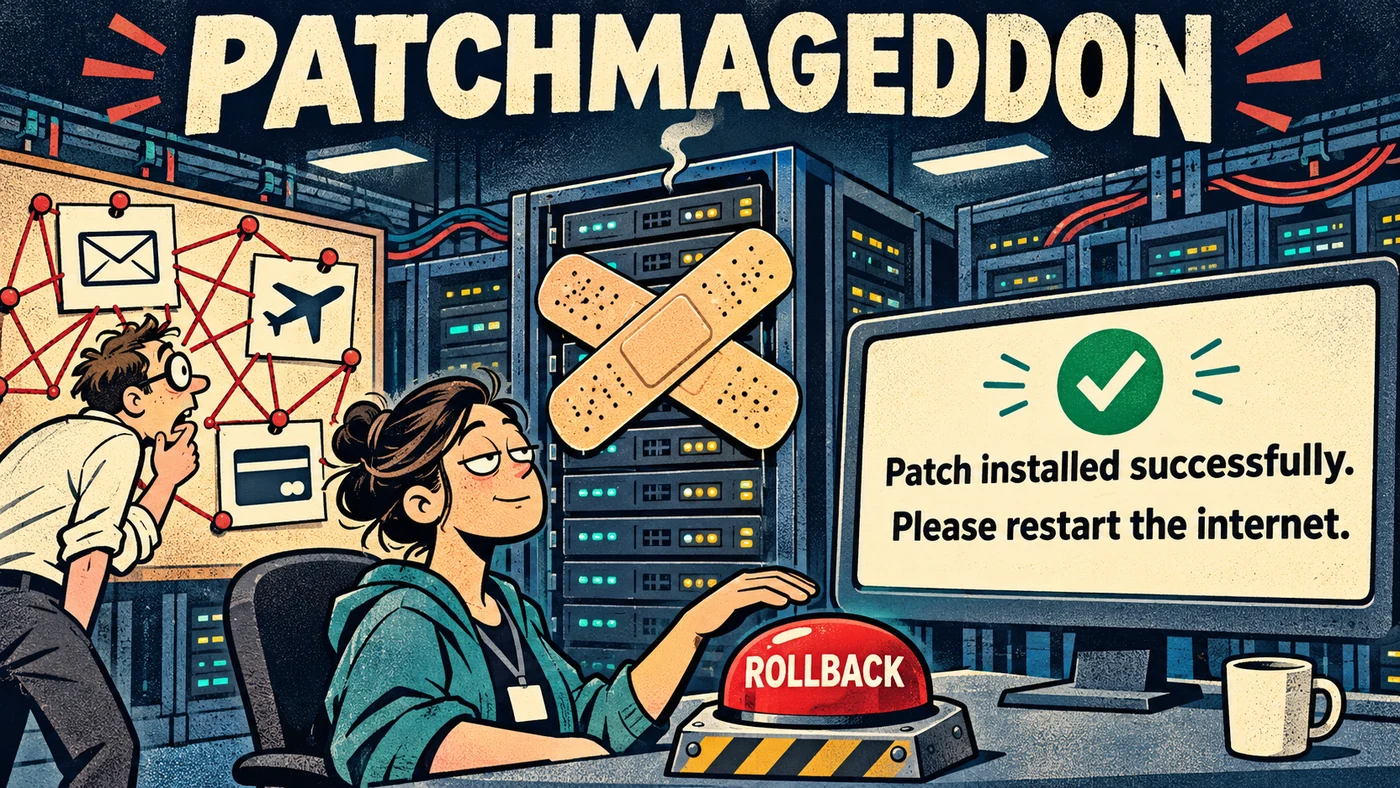
I urged readers to install security updates quickly in TOP STORIES #176 in July. In #184 and again in #192, I warned that a necessary update can break a working system. If you patch faster, you need to spot trouble and recover faster too. The patching warning in #192
Several prominent services failed within days of one another. The public accounts point to separate incidents. Microsoft’s final report shows how a defect introduced months earlier surfaced under peak load and spread when safeguards shifted traffic. Testing under realistic conditions and knowing how to contain the damage both matter. Microsoft’s incident findings (opens a new tab)
The time between a vendor receiving a vulnerability report and the details becoming public is shrinking. Google’s Project Zero plans to move to a 60-day disclosure window on 2 February 2027. Anthropic has shortened its window for high- and critical-severity findings to 30 days. Google’s policy (opens a new tab) and Anthropic’s policy (opens a new tab)
Start with systems exposed to the internet and weaknesses attackers are already using. Test on the hardware and applications you actually run. Roll out in stages and check that people can still sign in, send mail and do their jobs.
Name the person who can stop a bad rollout. Make sure you can reach them when normal communication is down. If you rely on a partner, ask them to show you how they would restore the service under pressure.
THE SOURCE / FURTHER READING
Want the full feature?
You’ve read the TOP STORIES interpretation. Continue to the publisher for the source feature or detailed guidance.
Read the original feature at SecurityWeek (opens a new tab)